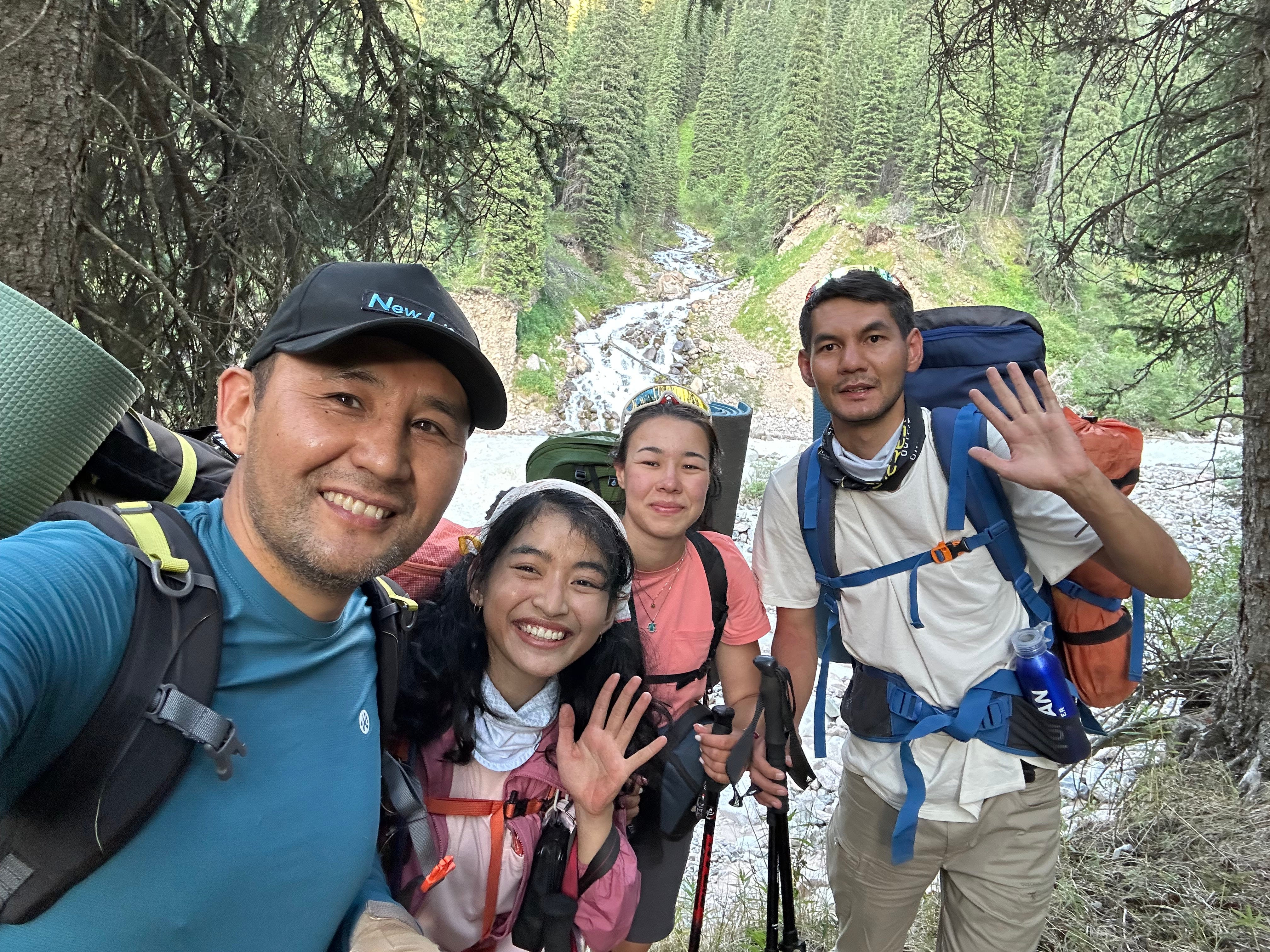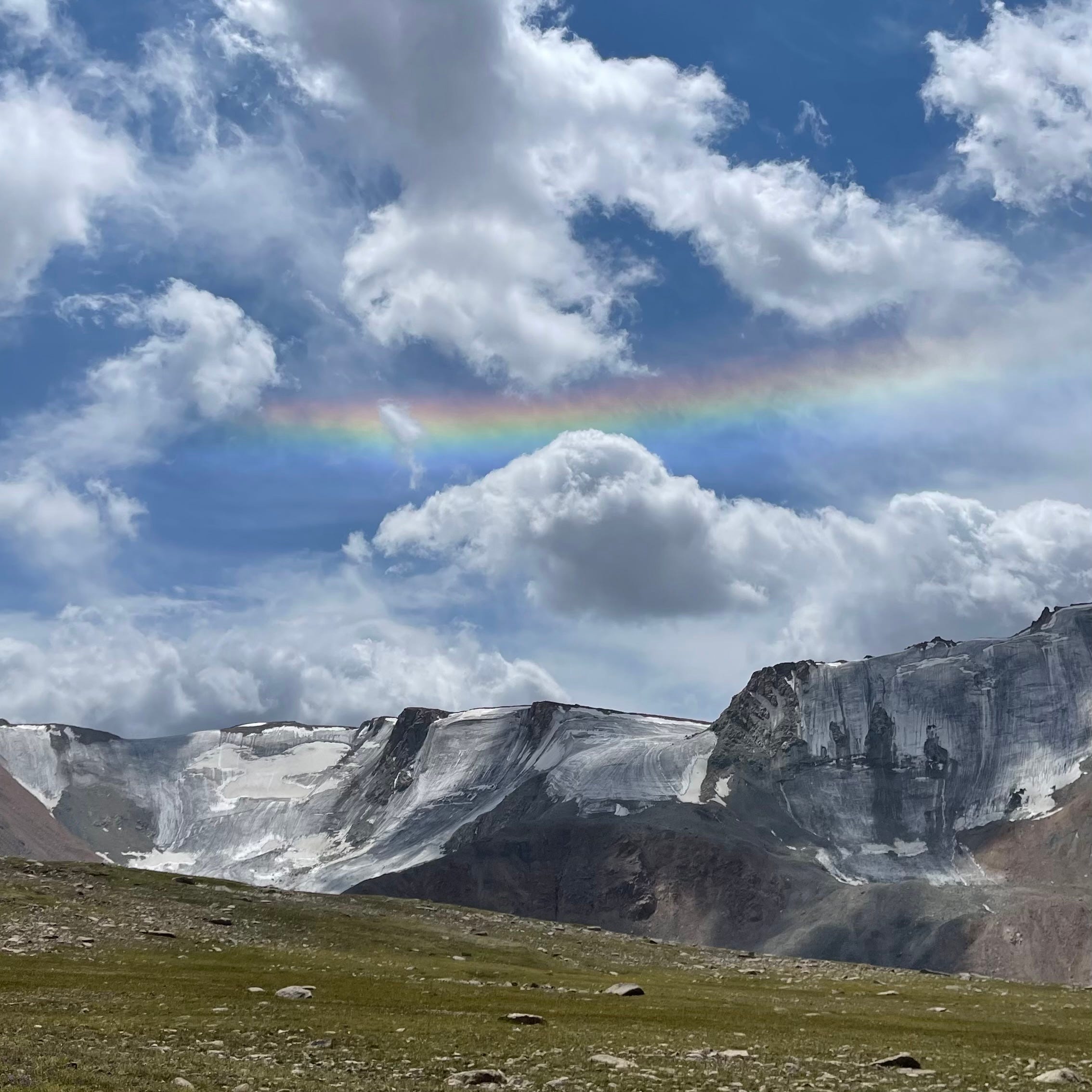
I had prepared for cold, hunger, and an unexpected night in the mountains.
What I had not prepared for was the trail disappearing.
This would be my first solo hike. Despite having hiked since I was eight, I had never gone alone before. Instead of attempting it somewhere in Indonesia—a country whose climate, terrain, and language were familiar to me—I had chosen a high-altitude mountain in Kazakhstan, with snow and ice still visible near the peaks.
Still, I believed I was prepared.
I carried an emergency kit, a tarp tent, a down sleeping bag, heat packs, an emergency blanket, and a water-filtering straw. I had downloaded the route, switched on my GPS, and brought two power banks.
More importantly, I had established limits for myself.
Reaching the lake—or any final destination—was never the ultimate goal. The goal was to return safely.
I would walk no more than twelve to fifteen kilometres in one direction: thirty kilometres round trip at most. If the path became too confusing, I would turn back. I had enough food for three days, and I had no intention of letting ambition override what I knew about my own limits.
What unsettled me was not the equipment or the distance.
It was that nobody seemed to know the place I was asking about.
Titov Lake (Озеро Титова) was supposed to lie beyond a camping area called Sunny Valley (Поляна Солнечная). Yet when I reached the upper part of Shymbulak (Шымбұлақ), I could find no sign pointing towards either of them. I asked several people, but the names did not seem familiar to anyone.
All I had was a memory from a YouTube video.
The person in the video, Adriel Ho, appeared to have followed this particular route. I had messaged him beforehand, and he had kindly shared his itinerary with me. He told me that the trail was easy to follow because the path was clear.
What I had forgotten to ask was whether there were any signs.
Apparently, there were none.
I waited near the path for some time, unsure whether taking it would be confidence or carelessness. Then I saw a family: a man walking with his daughter, who looked about ten, and his son, perhaps fourteen.
I asked whether they knew Titov Lake. Before trying to reach the lake, I explained, I wanted to walk towards Sunny Valley.
My limited Russian—and complete lack of Kazakh—made the conversation difficult. Fortunately, the son understood enough English. He pointed towards the path and assured me that I was going in the right direction.
It was already one in the afternoon.
“Three kilometres”
As I continued down the path, I began to meet more people. None of them seemed to be walking towards Sunny Valley, however. They were all returning from somewhere farther along the trail.
Each time someone passed, I greeted them and tried to confirm that I was still heading in the right direction.
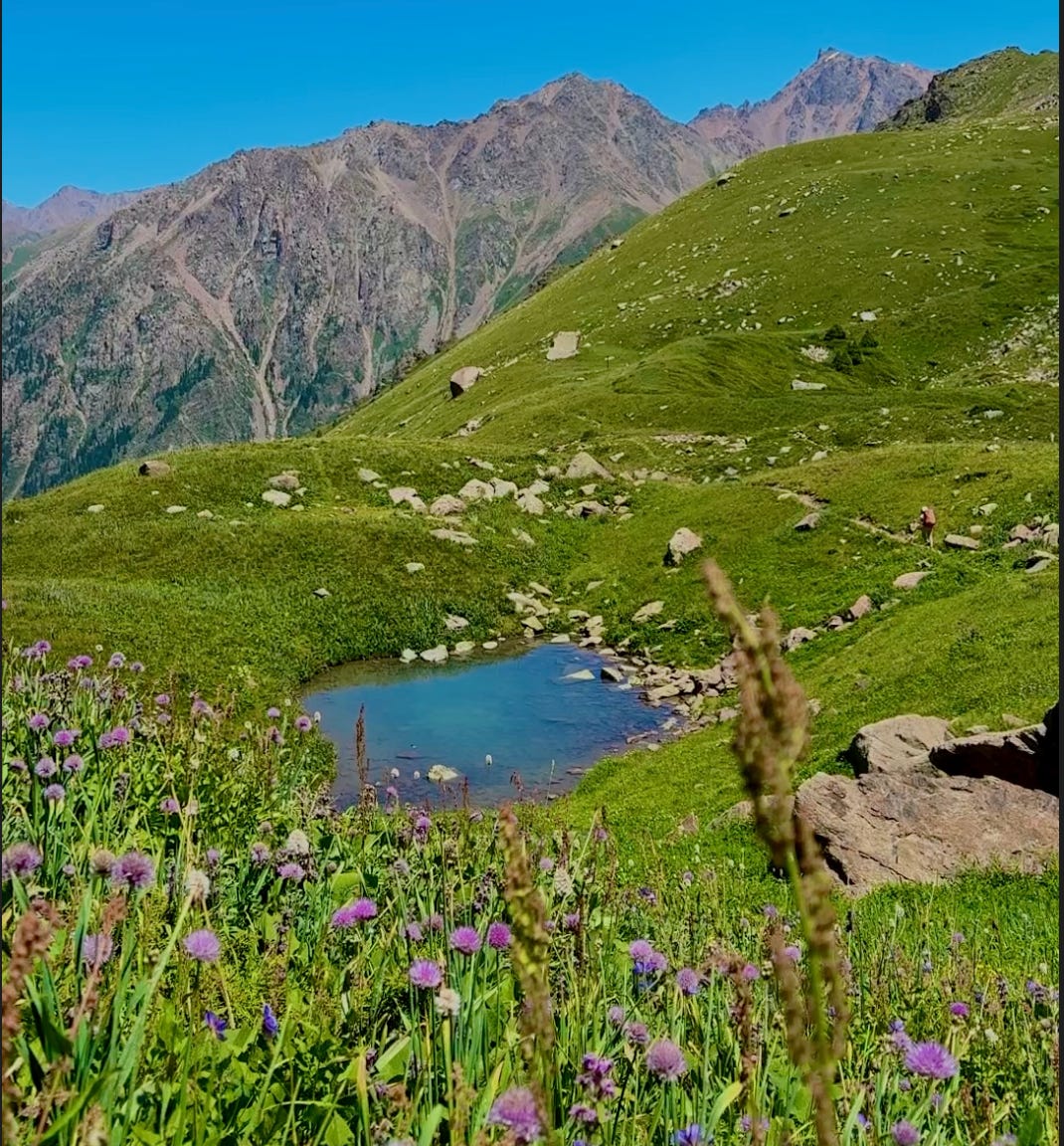
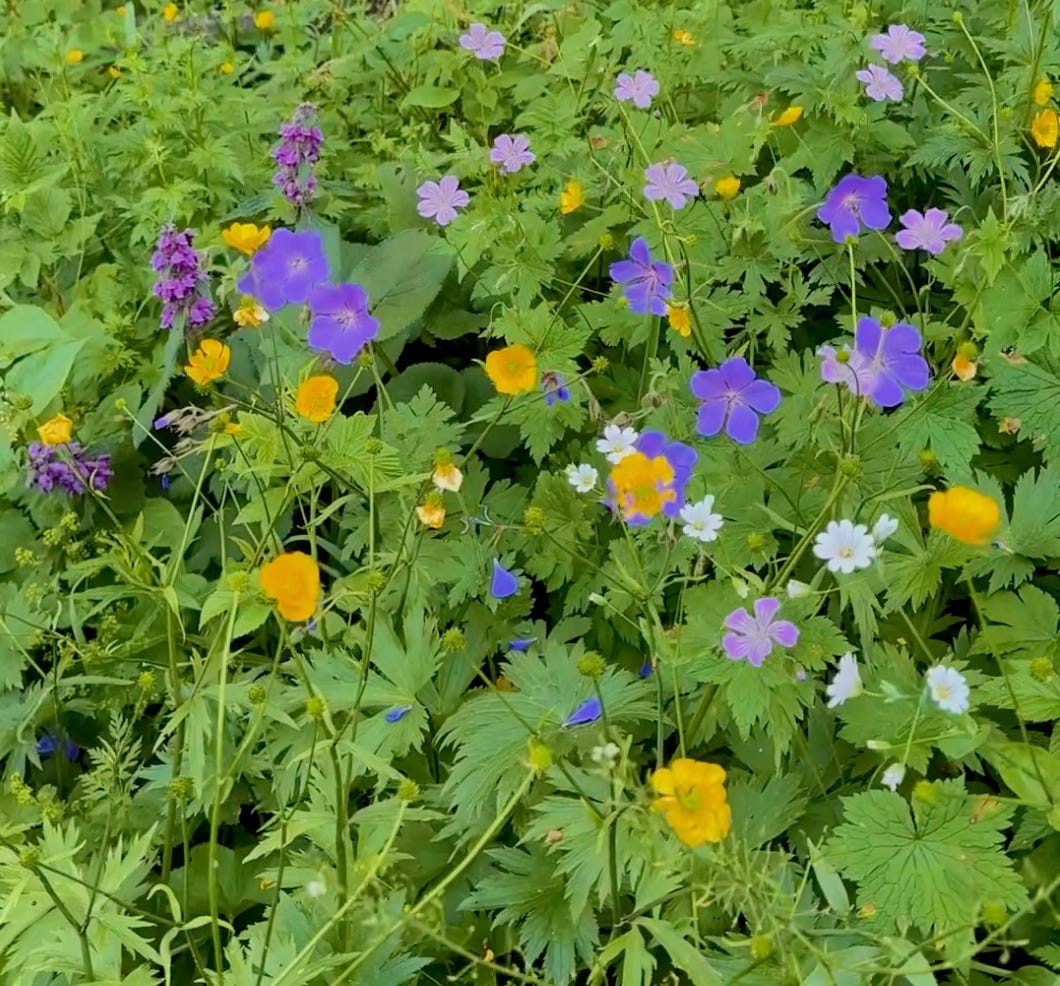
Soon, I passed through Talgar Pass, where the ground was carpeted with purple and pink flowers. It was extraordinarily quiet.
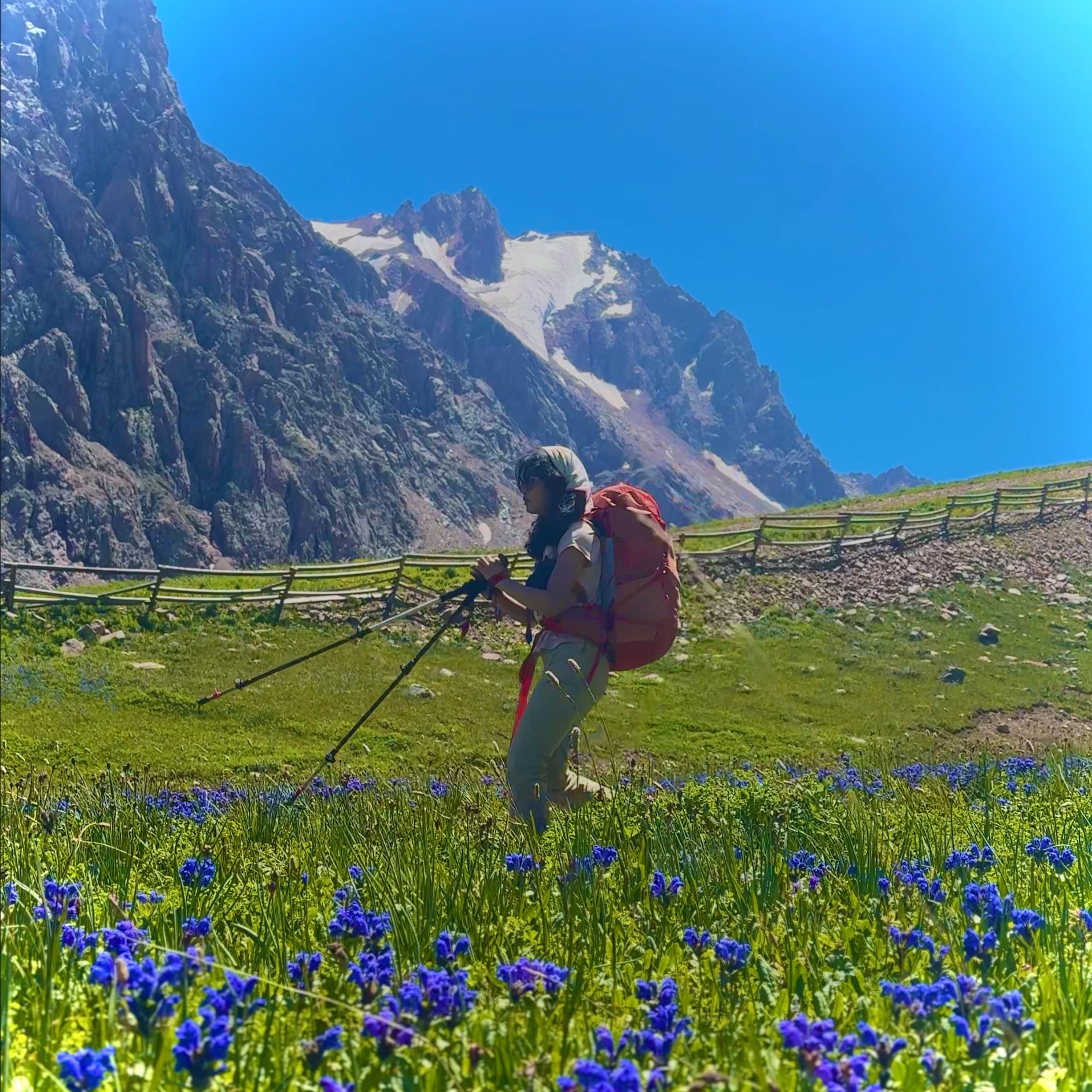
Only a short distance behind me—perhaps a hundred metres away—Shymbulak Resort was still crowded with visitors. Yet here, the crowds had vanished. There were only the flowers and the steady white noise of the river.
At one point, the trail divided. I briefly followed the path beside the river before another hiker gestured that I should take the other route.
From Shymbulak, the path had first descended into the valley. Now it began climbing again along the side of the mountain. A grassy slope rose on my right. To my left, the land fell away—not into a frighteningly steep ravine, but into a wide green hollow filled with flowers.
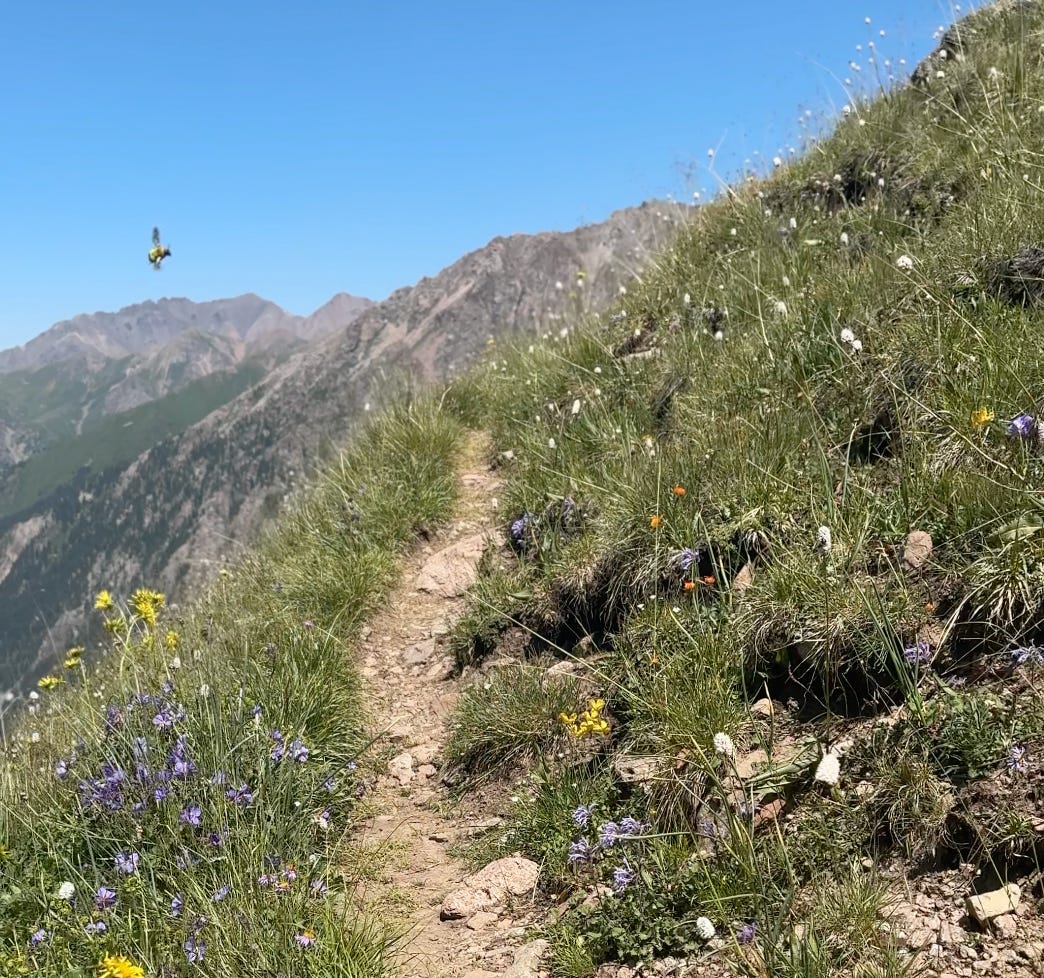
Butterflies drifted across the trail, and bees moved busily between the blossoms. They seemed completely unbothered by my presence. As I walked through them, I could hear their humming all around me.
It felt like a party, and I was merely passing through it.
Although it was already close to two in the afternoon, the temperature did not feel particularly hot, at least compared with hiking in a tropical country. But the air was thinner and much drier than I was accustomed to.
In Indonesia, I could hike eight kilometres on around one and a half litres of water. Here, before I had even walked three kilometres, I had already consumed nearly a litre.
The dry mountain air humbled me quickly.
The trail itself remained clear, just as Adriel had promised. What I did not know was how far it continued. I had never seen a photograph of Sunny Valley, nor did I know exactly how long it should take to reach it.
So whenever I met someone, I asked.
“How much farther?”
The answer was almost always the same.
“Three kilometres. Just follow the path.”
After walking several more kilometres without seeing anything resembling a campsite, I began to suspect that “three kilometres” was less a measurement than a form of encouragement.
Eventually, the flower-covered slopes gave way to a dense forest of tall trees. Then, through the trunks, I noticed smoke rising into the air.
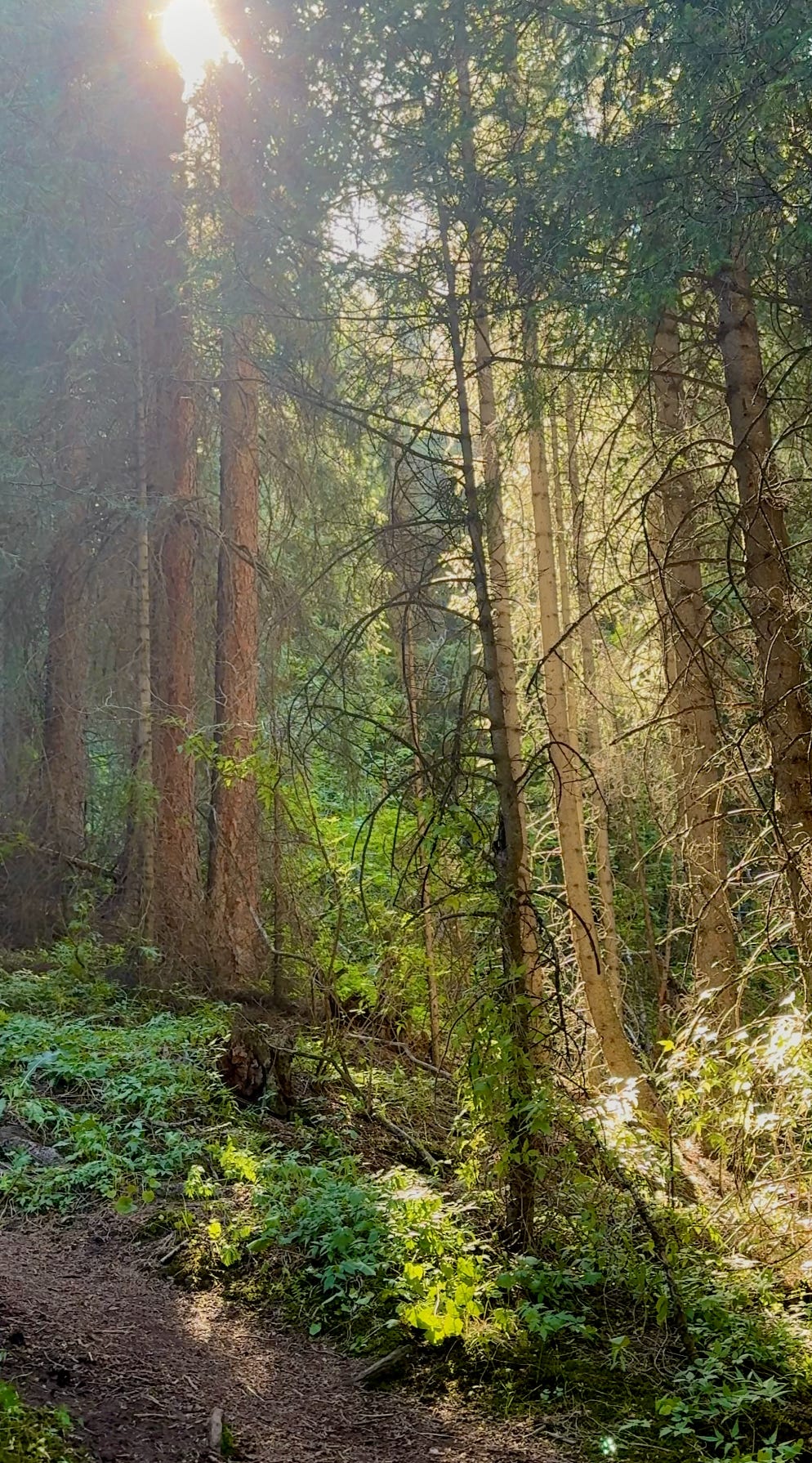
Someone was resting there—and, judging from the smoke, definitely cooking.
Nearly four hours into my hike, I had finally reached a group of people.
“Hi!” I called.
They looked up and greeted me in return.
Then came an even greater surprise: for the first time since I had entered the trail, I had found people who spoke English.
The first thing they asked was where the rest of my team was.
With what I now recognise as a rather naïve smile, I answered, “Oh, I’m hiking alone.”
There were seven of them.
My answer did not impress them. Instead, their expressions immediately changed to concern.
“Where are you going?”
I opened the map on my phone and pointed to the location I had marked.
“There,” I said. “I want to camp there.”
Their concern deepened.
“There is no campsite there.”
For a moment, my stomach dropped. The afternoon was advancing, and the sun had begun disappearing behind the mountains. I was alone, and apparently I had been walking towards the wrong place.
All right, I thought. This must not be the campsite. I should turn around while I still have enough daylight.
Then, to my surprise, they told me that they were also going to Sunny Valley.
They were the first people I had met who actually recognised the name. The problem was not Sunny Valley itself. The point I had marked on my map was simply wrong.
Until then, I had assumed this did not matter very much. The trail was clear, so surely I could continue following it until I reached the campsite.
I was wrong again.
The place where they had stopped to cook was nearly the end of the visible trail. Beyond it, there was no proper path. Reaching Sunny Valley meant navigating through rocks beside the river, using the landscape itself to determine where to go.
Only then did I understand how technical the route really was.
They asked how I had even heard about the place. Sunny Valley was not part of a typical tourist trail. The people who came this far were generally experienced hikers: physically fit, properly equipped, and able to read unfamiliar terrain.
Suddenly, the lack of signs made sense.
In Indonesia, I was accustomed to mountains with registration points, base camps, checkpoints, and entrance fees. Someone usually knew that you had entered the trail.
In Kazakhstan, access felt much freer. But that freedom came with another expectation: you were responsible for understanding the terrain and taking care of yourself.
The group began discussing what to do with me. Eventually, they asked whether I wanted to join them.
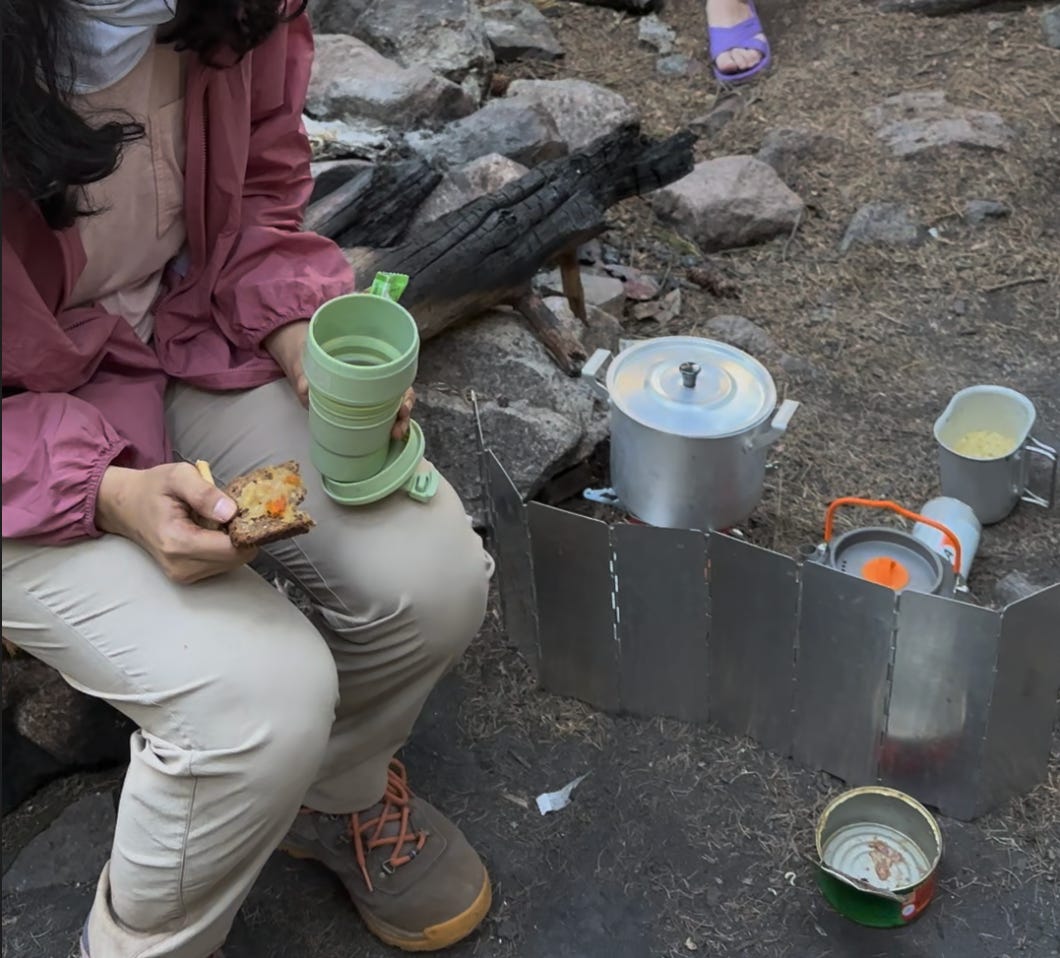
Every hiker understands an unwritten rule: when you join someone else’s team, you should not become their burden. They had planned their route, calculated their supplies, and packed food for themselves. I could follow them for safety, but I still needed to provide for my own needs.
I told them that I would walk with them for as long as I could keep up. If I reached my limit, I would turn back.
They assured me that Sunny Valley was no longer very far away.
That was excellent news. Only minutes earlier, I had resigned myself to returning alone. Now, unexpectedly, seven strangers were offering to let me travel with them.
So I joined the group.
Beyond the visible trail
They had been completely right about the route.
Shortly after we left the cooking spot, the path disappeared. We moved instead across uneven rocks beside the river.
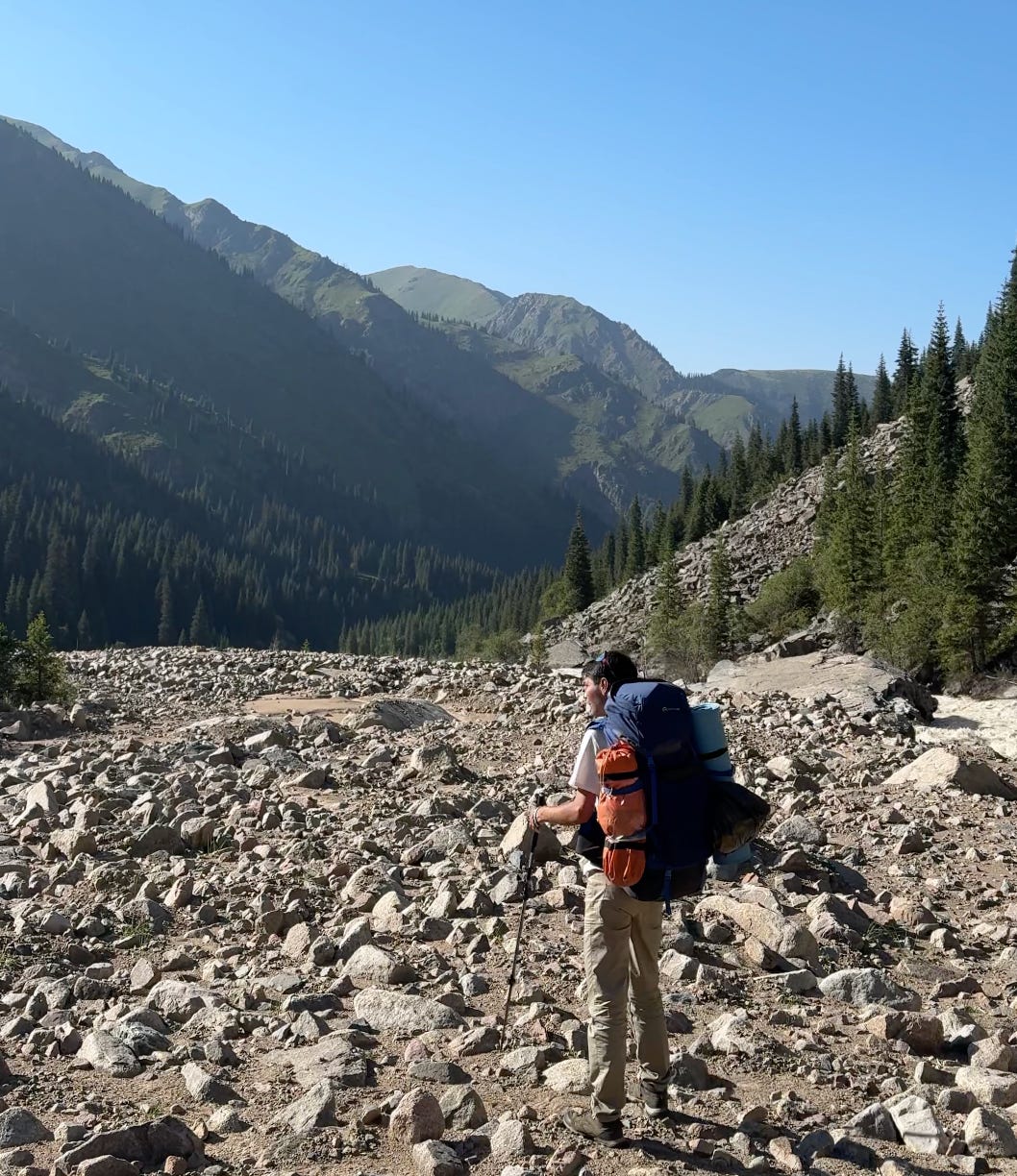
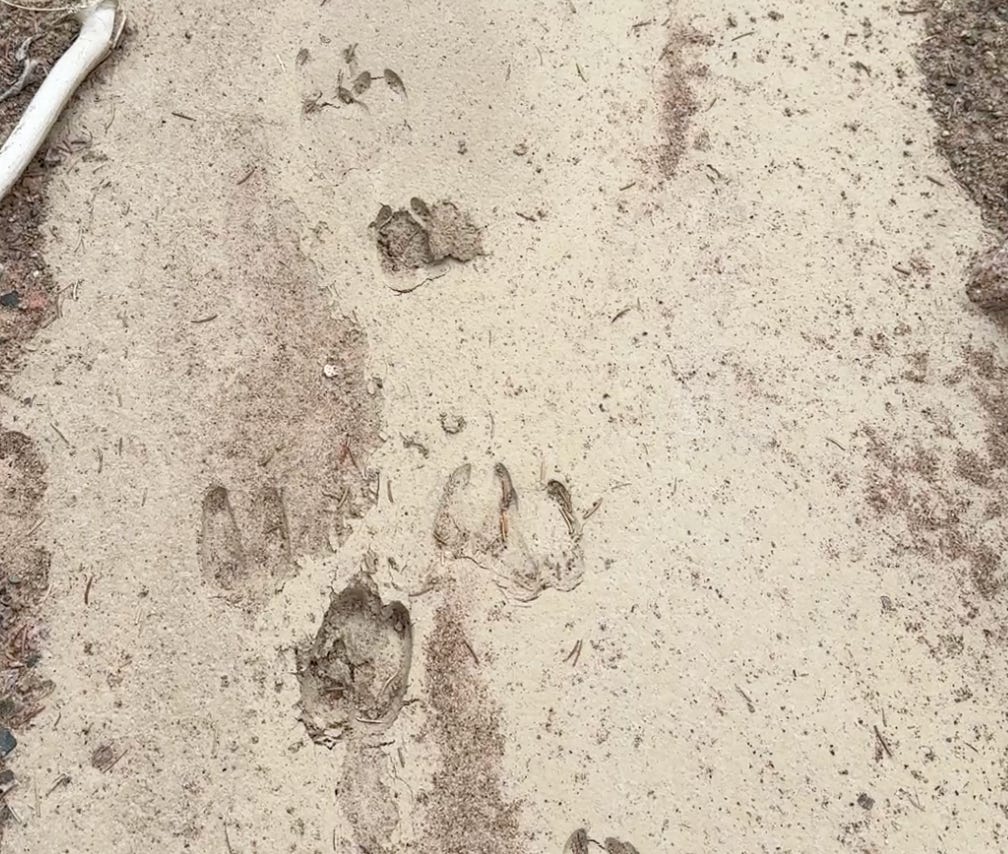
Occasionally, I noticed small piles of stones balanced on top of one another. These cairns had been placed by previous hikers to indicate the approximate direction. But they were small and widely spaced. Unless you paid close attention, they were easy to miss.
Then the remaining light disappeared behind the mountains, and the temperature changed almost immediately. A cold breeze moved through the valley. I stopped to add more layers, trying to preserve my body heat.
Darkness came before we reached the campsite.
We were still crossing the rocky area when Sasha—short for Alexander—began to struggle with fatigue. He was one of the oldest members of the group, perhaps in his sixties, and worked as a filmmaker. His backpack carried not only his hiking supplies but also the equipment he needed to document the route.
The group had already travelled a considerable distance as part of a longer project. By then, Sasha was exhausted.
Continuing through the rocks in darkness was becoming unsafe.
Omir, a retired soldier and seemingly the strongest and most experienced person among us, decided to move ahead alone. He would search for somewhere we could stop for the night. If he found a suitable place, he would light a fire so the rest of us could locate him.
“What happens if he doesn’t find one?” I asked.
There were two other possibilities.
Someone could continue to Sunny Valley, where an emergency shelter reportedly had a phone signal, and try to arrange a helicopter rescue.
Otherwise, we would have to spend the night somewhere in the open.
Neither option was reassuring. The ground around us consisted almost entirely of exposed rock, with very few flat or sheltered places. Setting up an ordinary tent would already have been difficult. Setting up my tarp tent, which depended on suitable ground and secure anchor points, would have been even harder.
Eventually, Omir found a place where we could stop.
It was exposed, with little protection from the wind, but under the circumstances, it was good enough. More importantly, there was enough space for us to rest.
As expected, setting up my tarp tent on the rocky ground was difficult. Several people helped me, especially Omir. One of the lightweight pegs bent under the pressure, so he tied the guyline around a large rock instead.
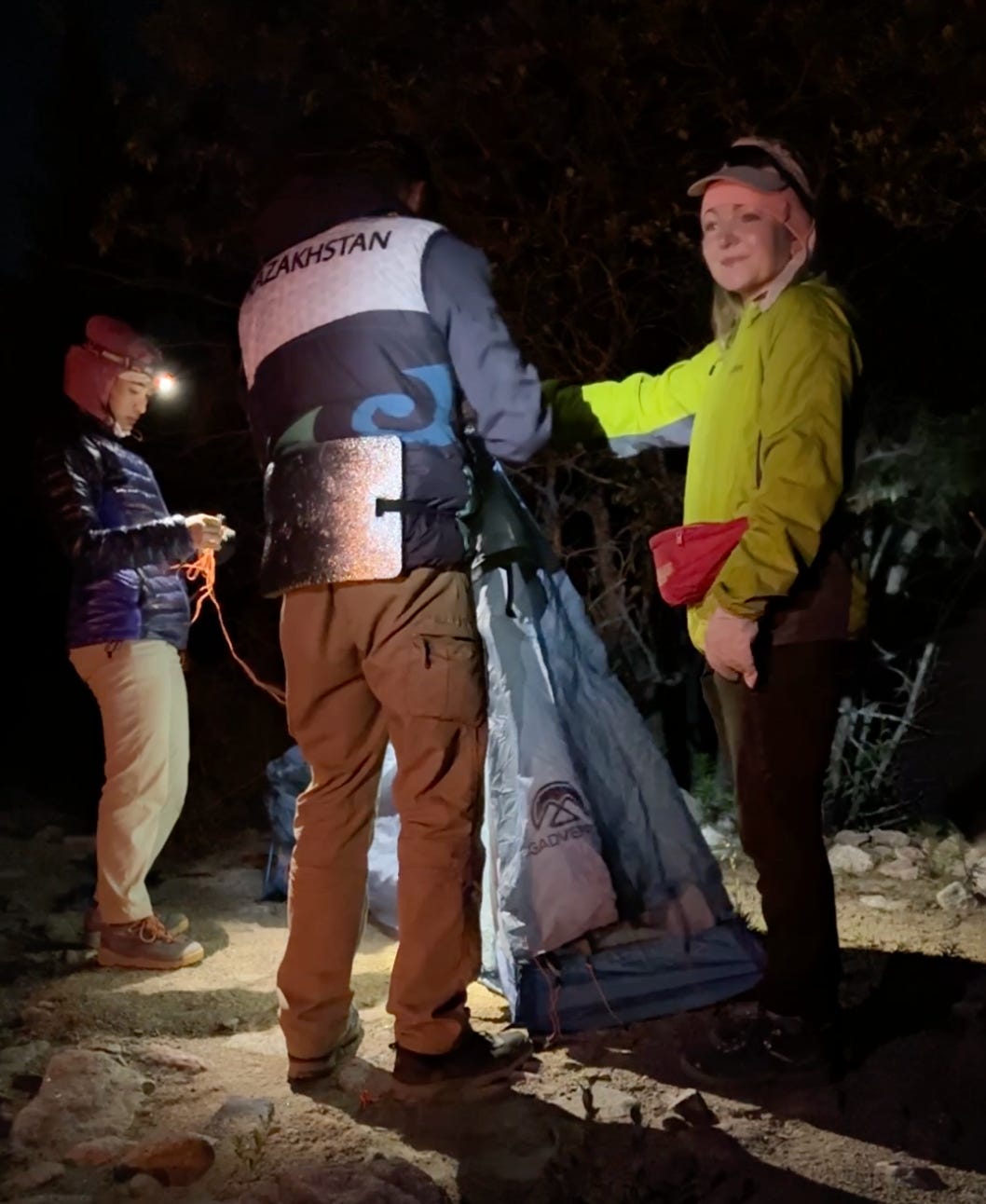
It was not an elegant setup, but the tent stood.
By then, it was around ten at night. I was cold and exhausted, and my only concern was getting inside and falling asleep as quickly as possible.
Sasha, meanwhile, was placed beside the fire. He lay on his back while the others wrapped him in a reflective emergency blanket. The sheet was too short for his tall body, covering him only from around his neck to his feet.
The wind kept lifting its edges, so we placed rocks carefully around the blanket to hold it down.
Once the immediate situation was under control, the group began a serious discussion. They spoke in Kazakh, so I could not understand what was being said. Only Sarra and Temir spoke English comfortably.
Eventually, I asked what they were discussing.
It was about Sasha—and about the project that had brought them onto this route.
They had a deadline. Their journey needed to be completed, documented, and turned into a report. If the whole group abandoned the route and returned, they might not finish the project as planned.
But Sasha was clearly too exhausted to continue.
After listening to the explanation, I interrupted with what seemed like a practical solution.
“Why don’t I go back with Sasha tomorrow morning?”
Everyone looked at me.
“I have GPS,” I continued. “I can follow the exact route we walked today. And honestly, I did not expect the trail to be this technical. My supplies may also become limited if I continue. It might be better for both of us to return.”
To me, it seemed like a way to help.
They had taken me into their group when I was alone and heading towards the wrong place. Now Sasha needed to return, while the others still needed to reach Sunny Valley and complete their project.
Safety had always mattered more to me than reaching a destination. I knew that continuing farther into unfamiliar terrain could push me beyond my limits.
Returning with Sasha appeared to solve both problems: he would not have to go back alone, and the rest of the team could continue towards their goal.
It was, in my mind, a way of giving something back.
Their response was immediate.
“What? No.”
They were almost horrified.
“You have never been here before either.”
My GPS could retrace our general direction, but it could not necessarily show us the safest route across every rock or river passage.
Temir offered a compromise. He would accompany us the following morning until we reached the section where the visible trail began again. Once he knew we were safely on the path, he would turn around and rejoin the others.
Even that did not seem ideal. It would require him to cover a considerable distance in both directions and temporarily separate from the group.
But I understood the principle behind it.
They had come as a team, and a team did not simply leave one of its members behind.
We did not settle every detail that night. But we agreed on one thing: Sasha and I would begin the return journey as early as possible.
Before I went to sleep, someone asked again whether I understood any Russian or Kazakh.
I did not.
Still, everyone seemed to think we would manage. I had a translation app on my phone, after all.
At that point, none of us knew how unreliable that solution would become.
Sasha and I became a team
The sky began to brighten at around three the following morning. By four, I had packed my belongings and was ready to leave.
It was only in the daylight that I could properly see what Omir and the others had constructed the night before.
My tent looked terrible.
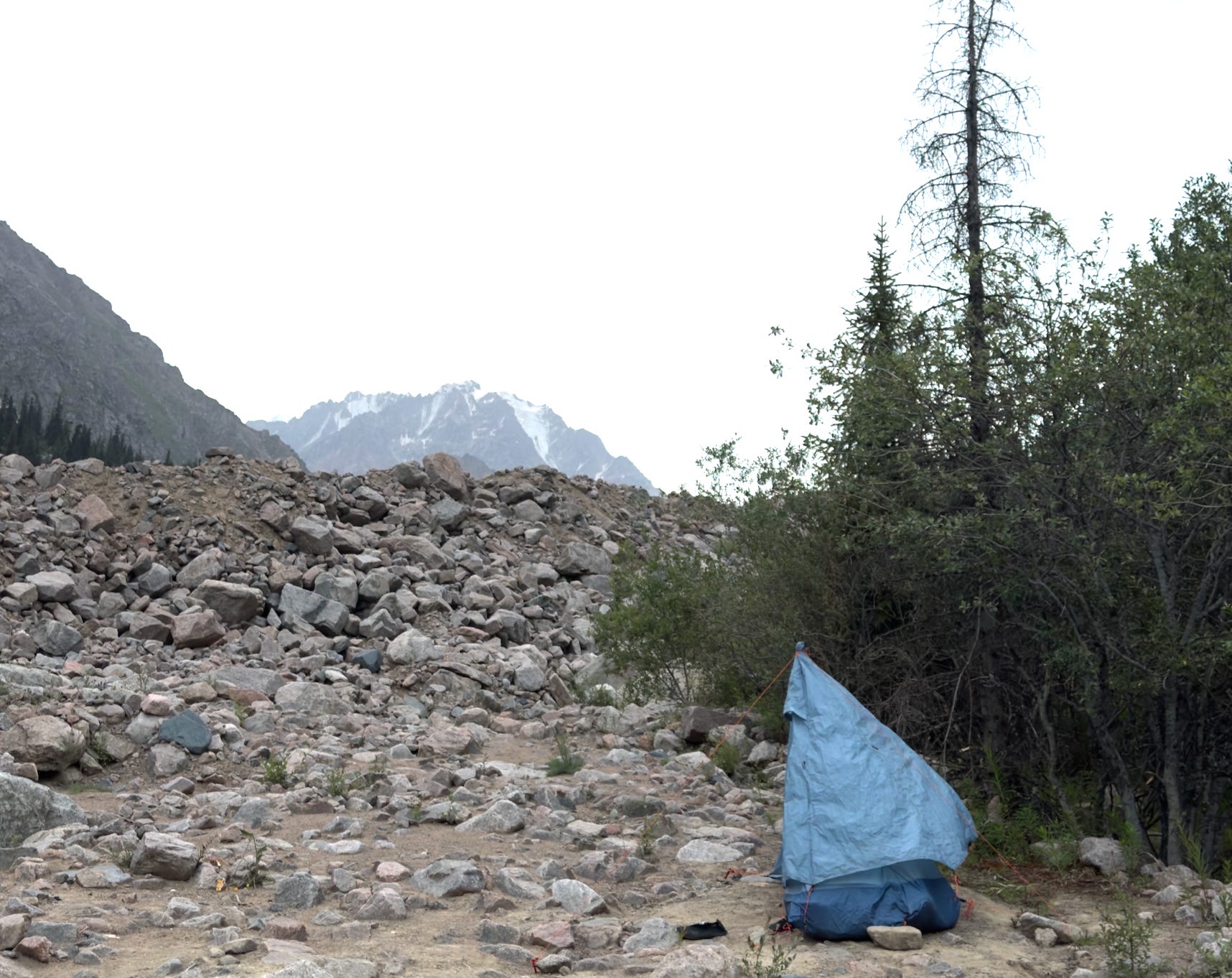
Not unsafe, exactly. It was still standing. But with its lines stretched awkwardly towards large rocks and its shape distorted by the uneven ground, it looked less like a tent than something that had survived a minor natural disaster.
Still, it had done its job. I had slept, my equipment was packed, and I was ready to return.
By morning, Sasha’s condition had improved. Temir ultimately decided not to accompany us. He believed I could navigate the route, and Sasha was feeling strong enough to walk.
I made sure my phone was fully charged and checked that I could access the GPS record from the previous day.
Before leaving, I said goodbye to the others. We promised to send them a message as soon as we reached safety. They also said that once everyone had returned, we would meet again for lunch.
Then the group continued towards Sunny Valley, while Sasha and I turned back.
And just like that, we became a team.
There was only one problem.
Sasha did not speak English at all, and I spoke neither Russian nor Kazakh.
The return journey was somehow even funnier than the day before.
We communicated almost entirely through gestures. Thanks to Duolingo, the only Russian words I could recall with confidence were krasivo—beautiful—and moloko—milk.
Neither was particularly useful for navigating a mountain.
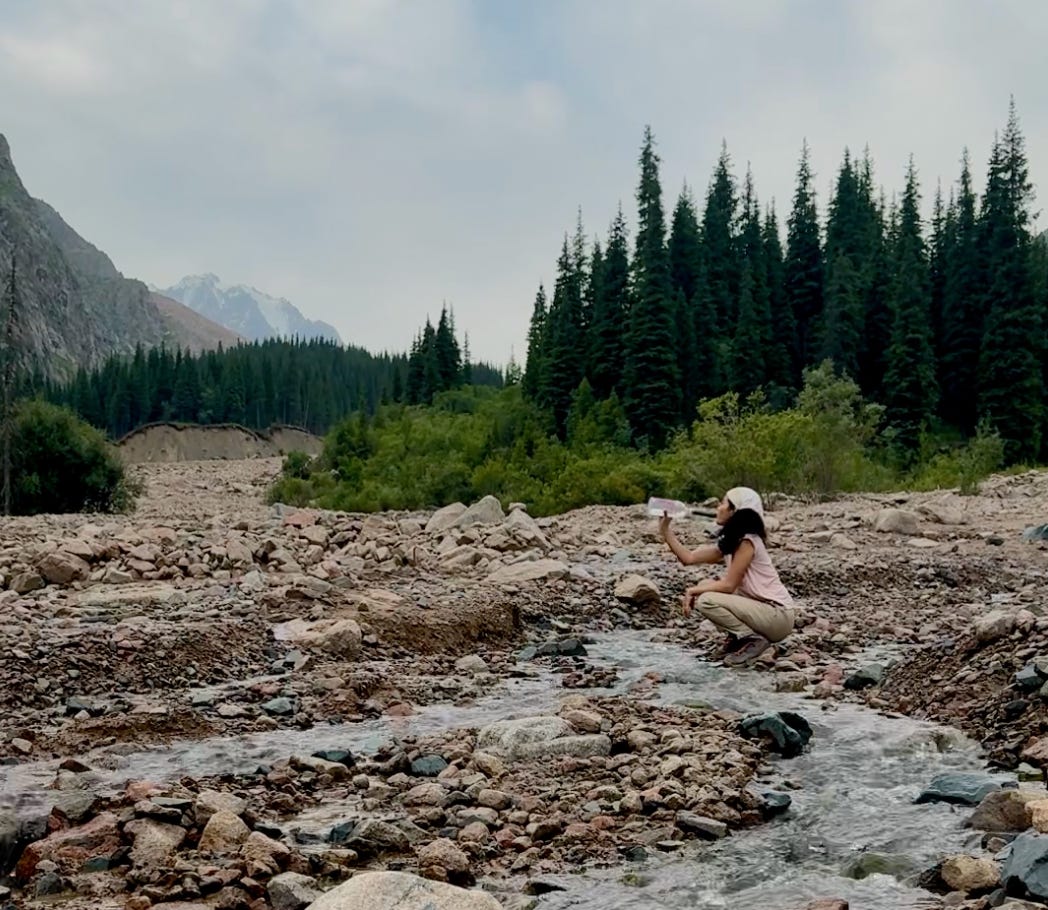
Everything else was expressed through pointing, facial expressions, and increasingly elaborate movements of our hands. When neither of us understood, we usually laughed.
It was frustrating, of course, but it also kept the mood light.
I walked in front because I had the GPS record and could retrace the route we had taken. Sasha followed behind as we made our way back across the rocks, searching for the small cairns that marked the direction.
Eventually, we reached the place where we had first met the group. The rocks ended, the trail became visible again, and from there, at least, we only needed to follow it.
Sasha seemed relieved. He gestured his thanks, pointed to himself, and began breathing dramatically.
“Hah. Hah. Hah.”
He was trying to tell me that he became tired easily.
Then he gestured for me to continue without him. He would be all right, he seemed to say. He was moving too slowly.
To make his point, he imitated a snail with his hand.
But by then, I was exhausted too.
I was also a snail.
I shook my head and tried to explain that we were a team. I brought my two hands together, clasping them as though they were holding each other. Then I pointed towards the trail ahead and repeated the gesture.
We would go up together.
Eventually, he understood and agreed.
From then on, we moved mostly through gestures and silence. When Sasha became tired, I stopped. When I became tired, he waited for me.
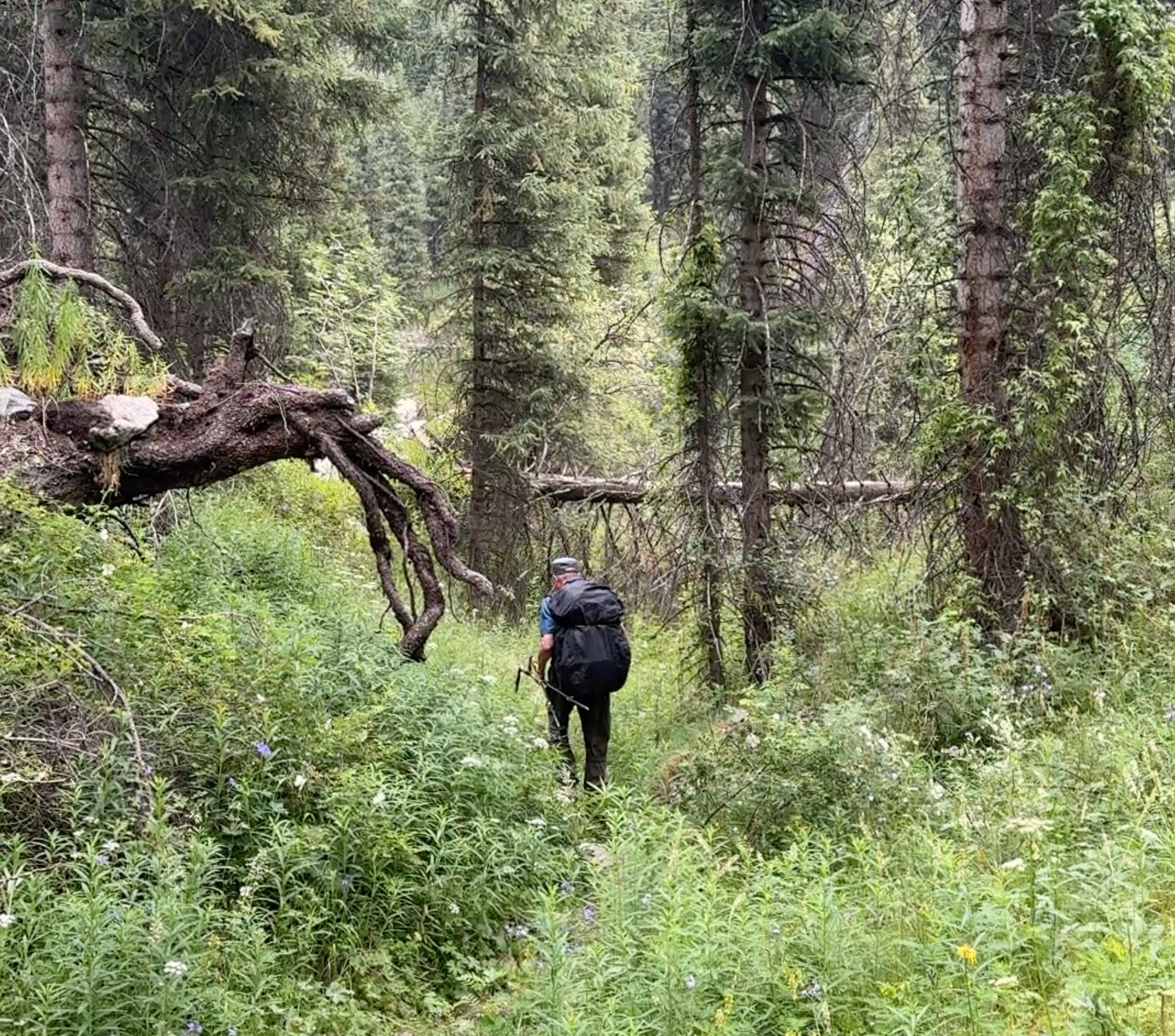
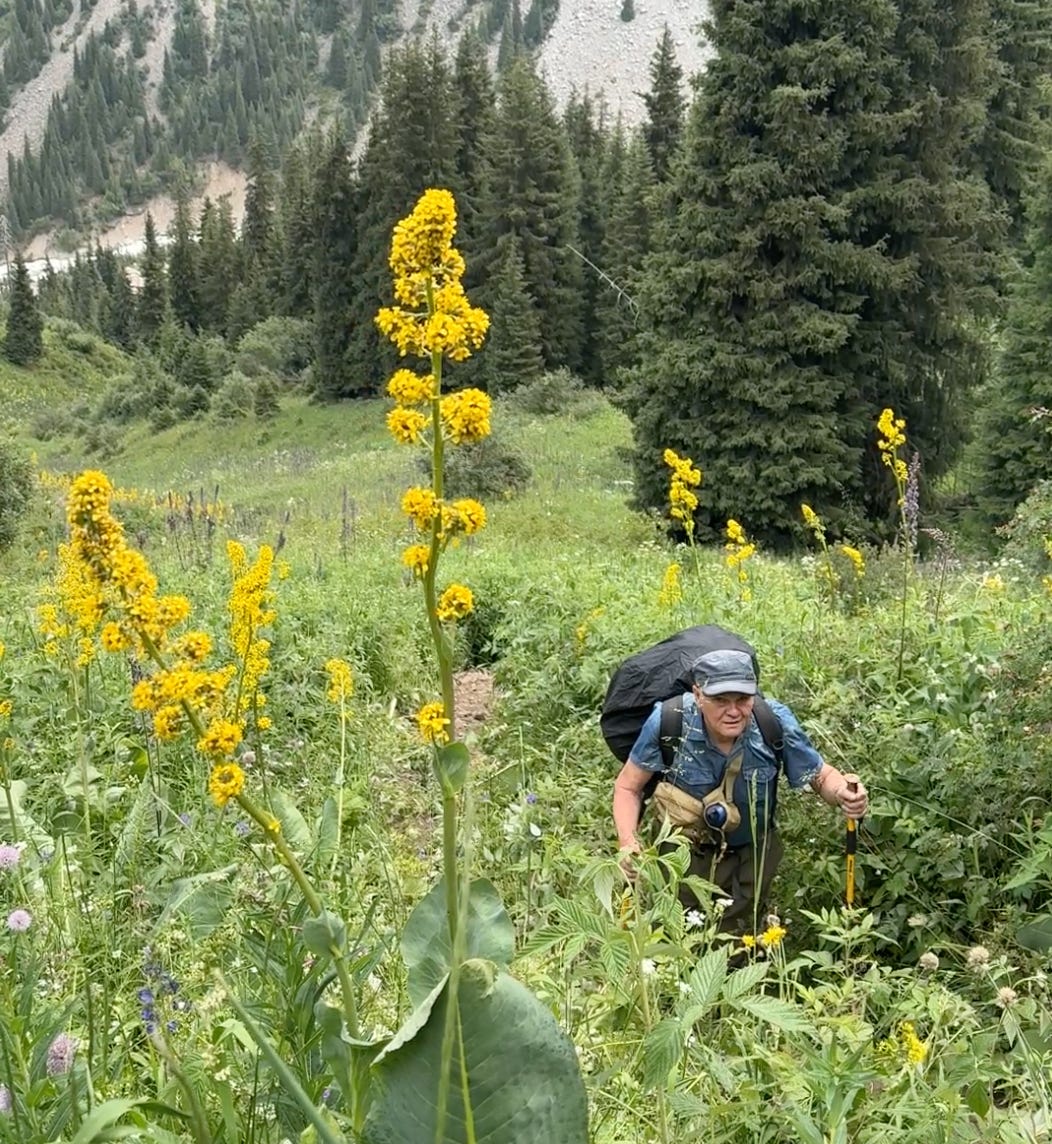
Without being able to explain much to each other, we established our own rhythm.
We continued like that until the buildings of Shymbulak finally came back into view.
Then my phone found a signal.
It began vibrating almost immediately.
Messages arrived one after another. There were missed calls from Ruslan, my friend in Kazakhstan.
There were also calls from 112, the emergency number.
It was already around five in the afternoon. Sasha and I had been walking for approximately thirteen hours since leaving the campsite at four that morning.
The signal was strong enough to receive messages but not strong enough for me to respond properly. I could see that people were trying to reach me, but I could not tell them I was safe.
Only when we reached the crowded area of Shymbulak could I finally send a message to the group chat with Ruslan and Lyosha.
“Guys, I’m safe.”
Almost immediately, my phone rang.
My friends had reported me missing.
From their perspective, my silence made no sense. Based on my original plan, I should have returned by Saturday morning. They knew I had gone towards Titov Lake, but they did not know that I had met another group, spent the night in the mountains, and then taken thirteen hours to walk back with Sasha.
They had already contacted emergency services. If they still had not heard from me by six that evening, a rescue team was preparing to begin searching.
I had returned with only an hour to spare.
I was deeply grateful that my friends had taken my silence seriously instead of assuming that I had simply lost reception or changed my plans. This time, I was safe. But in a worse version of the story, I really could have been missing—and their decision to raise the alarm might have made all the difference.
I explained what had happened, and Ruslan informed 112 that I had returned safely.
Despite everything, the story had ended well.
Sasha and I continued down to Medeu and caught the bus. Before reaching my stop, I typed a final message into the translation app.
Thank you. I will get off here.
We said goodbye in the same limited language with which we had crossed the mountain: a few translated words, gestures, and expressions that somehow contained more than either of us could properly say.
I also messaged the rest of the hiking group to tell them that we had returned.
But that was not the end of our acquaintance.
Later, I asked Sarra if she wanted to meet. She was close to my age, and during the short time we had spoken, I had thought she seemed remarkably cool. She is also a photographer.
Through her, I began learning more about the seven people I had met by accident.
Among them were a writer and lecturer, a filmmaker, a military veteran, and a botanist. They had arrived on the same trail from lives I would probably never have encountered through sightseeing alone.
I had set out that day looking for Titov Lake.
I never reached it.
Instead, I returned with the beginning of several friendships.